
What does regular screening provide?
Regular self‑exams help you notice new or changing spots earlier and discuss them with a clinician. Early awareness makes it easier to decide whether a lesion should be monitored or examined further.
A simple self‑exam routine
Dermatology organizations recommend checking the skin in a well‑lit room using a full‑length mirror and a hand mirror. Pay attention to:
- front and back of the body and both sides,
- underarms, forearms, hands, and between fingers,
- legs, feet, between toes, and soles,
- the back of the neck and scalp with a hand mirror,
- the back and buttocks with a hand mirror.
When to see a doctor
Book a visit if a spot looks different from others, grows, changes color, or starts itching or bleeding. When in doubt, a professional exam is the safest option.
How videodermatoscopy supports screening
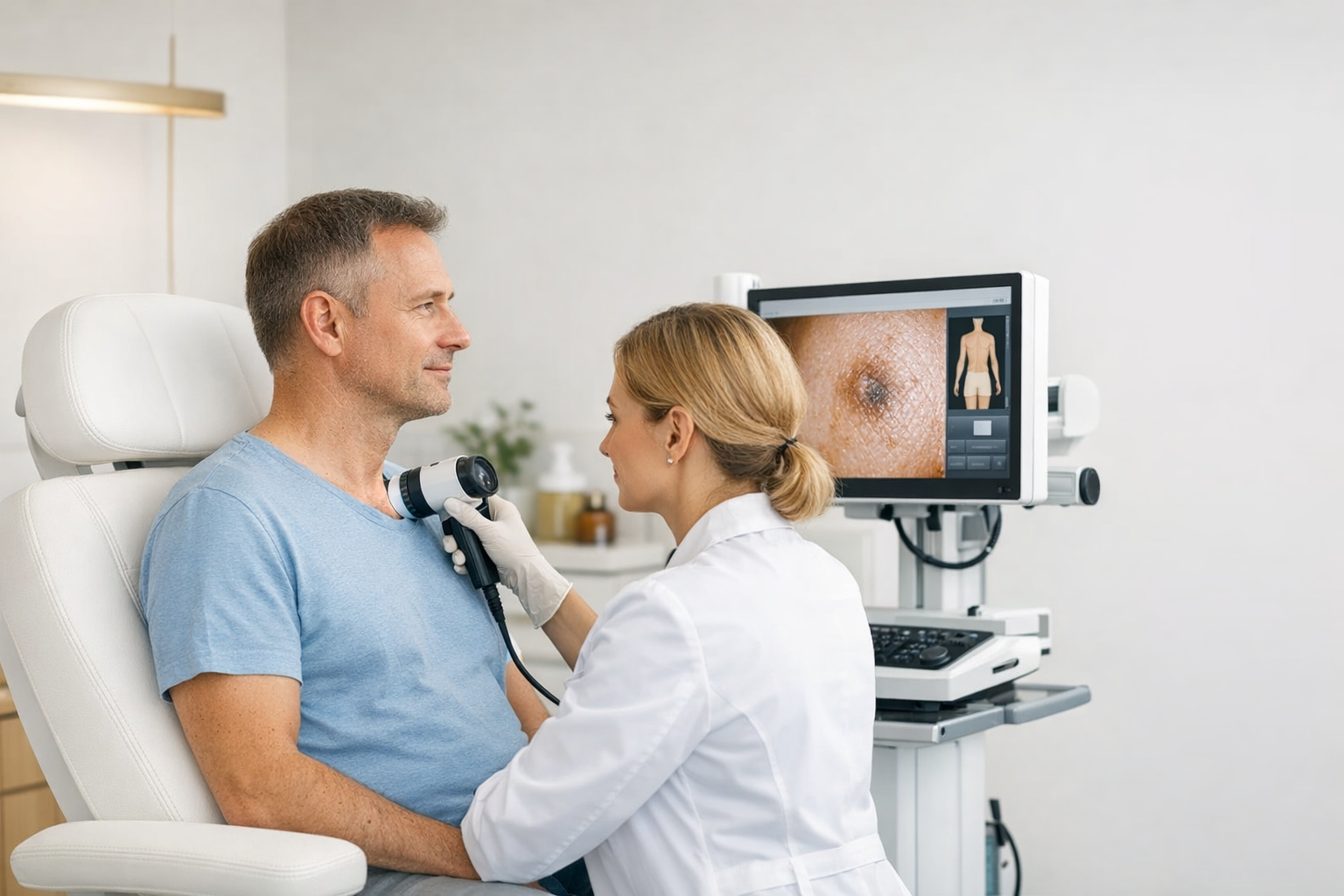
Videodermatoscopy provides photo documentation and allows side‑by‑side comparison over time, which supports follow‑up decisions.